
Homeownership requires strategic financial planning, particularly when managing recurring expenses like utility bills. For properties in the Midwest, maintaining a comfortable indoor climate year-round demands significant energy consumption. Evaluating the return on investment (ROI) for major exterior property improvements is a standard practice for property owners looking to optimize their monthly budgets. One of the most effective upgrades a property owner can make to minimize thermal transfer and reduce reliance on heating and cooling systems is investing in energy-efficient windows.
Understanding the financial mechanics behind window upgrades involves looking beyond the initial purchase price. By calculating the ongoing reduction in electricity and natural gas consumption—specifically looking at local providers like ComEd—property owners can accurately determine how long it takes for a window upgrade to pay for itself. This comprehensive breakdown explores the variables that influence the payback period, the science behind thermal efficiency, and the long-term financial benefits of modernizing a property’s exterior.
Analyzing the True Cost of Outdated Windows
Outdated, single-pane, or failing double-pane windows represent a significant point of vulnerability in a building’s thermal envelope. As seals degrade and structural framing warps over time, conditioned air escapes while exterior air infiltrates the home. This continuous cycle forces HVAC systems to operate longer and more frequently to maintain the desired thermostat setting.
The financial impact of drafty windows is directly reflected in monthly utility statements. Electricity providers structure their billing based on the number of kilowatt-hours (kWh) consumed, alongside delivery fees that scale with usage. During the peak of summer, an overworked air conditioning unit draws immense amounts of electricity. During the winter, the furnace or heat pump compensates for the constant heat loss. Every therm of gas and kWh of electricity wasted through poor insulation directly inflates utility costs. Replacing outdated fixtures eliminates these extreme inefficiencies, lowering the baseline energy requirement of the property.
The Science of Modern Window Technology
To accurately calculate the ROI of new windows, it is helpful to understand the technological advancements that make modern fixtures vastly superior to older models. The fenestration industry relies on rigorous testing protocols established by organizations like the NFRC (National Fenestration Rating Council) to quantify energy performance.
Today’s highly rated windows are engineered with multiple layers of defense against the elements. Standard configurations now utilize double pane or triple-pane glass separated by insulating spacers. The space between these panes is often filled with a dense, non-toxic, odorless gas. The inclusion of argon gas effectively slows the transfer of thermal energy, preventing the cold winter air from penetrating the interior glass surface.
Furthermore, specialized Low-E (low-emissivity) coatings are applied to the glass. These microscopic metallic layers reflect infrared light—meaning they bounce the sun’s radiant heat away from the home during the summer while reflecting the home’s interior heating back inside during the winter. This combination of multi-pane construction, gas fills, and reflective coatings works systematically to stabilize indoor temperatures.
Formulating the Return on Investment and Payback Period
Calculating the exact payback period requires evaluating three primary financial components: the initial cost of the project, the cumulative monthly utility savings, and the increase in overall property value.
Step-by-Step Breakdown of Energy Savings
When property owners ask if they can expect energy savings with new windows, the answer lies in consumption data. To estimate the utility payback, one must look at the average monthly ComEd and natural gas bills. By upgrading from single-pane or failing clear-glass double-pane windows to highly efficient modern units, a property can see a substantial reduction in heating and cooling costs.
If a home currently spends an average of $2,500 annually on heating and cooling, and high-efficiency windows reduce thermal transfer by a conservative estimate of 15% to 25%, the homeowner retains a significant portion of that budget each year. Over a 10-to-15-year period, these accumulated savings heavily offset the initial capital expenditure.
Factoring in Property Value Increases
The payback calculation is not limited strictly to utility bills. Real estate markets consistently reward properties that feature recent, high-quality exterior upgrades. Appraisers and prospective buyers place a premium on homes with updated thermal envelopes because it indicates proper maintenance and guarantees lower future living costs.
Historically, exterior remodeling projects yield a high percentage of cost recuperation upon the sale of the home. When calculating the final ROI, factoring in the equity gained by improving your home value often reduces the effective payback period by years. If a project recoups a large percentage of its cost in immediate property equity, the remaining balance is quickly covered by the month-over-month utility reductions.
Navigating the Elements of the Local Climate
Geographic location plays a pivotal role in determining the speed at which replacement windows pay for themselves. The Midwest is characterized by extreme temperature fluctuations. Properties must endure sub-zero blizzards, high-velocity winds, and intense, humid heatwaves. Understanding what makes a Chicagoland home energy efficient involves recognizing the dual demands placed on the property’s exterior.
Because HVAC systems must run almost year-round to combat these extremes, the financial penalty for having poor insulation is much higher in this region compared to more temperate climates. The measurement of a material’s resistance to heat flow is known as its R-value. Installing products with high R-values (and correspondingly low U-factors) yields faster and more dramatic savings in environments with harsh winters and hot summers.
Financial Incentives That Accelerate ROI
Another crucial variable in the ROI equation is the availability of financial incentives that lower the upfront cost of the project. Various government programs recognize the environmental benefits of reducing residential energy consumption and offer financial rewards to property owners who make qualifying upgrades.
Taking advantage of federal energy efficient home improvement tax credits can significantly reduce the net cost of the installation. When the upfront expenditure is lowered by state or federal rebates, the timeline required to break even through utility savings is proportionately shortened.
Additionally, modern lending solutions make these projects highly accessible. Property owners who choose to finance a window replacement can structure their monthly payments to closely align with the amount they are saving on their ComEd bills, creating a financially balanced approach to upgrading the home.
Selecting the Right Window Styles for Maximum Efficiency
The architectural style of the windows chosen also impacts the overall energy performance of the home. While glass technology provides the primary insulation, the mechanical operation of the sash plays a vital role in preventing air leakage.
Exploring different window types allows property owners to optimize efficiency based on the location and function of the room. Double-hung windows are a classic, highly popular choice that allows for versatile ventilation. Because both the top and bottom sashes are operable, they can create a natural convection current to cool a room during mild seasons, reducing reliance on the air conditioner.
Alternatively, casement windows operate on a side hinge and open outward with a crank mechanism. From an efficiency standpoint, these are among the most effective operable designs available. When a casement window is closed and locked, the sash is pulled tightly against the weatherstripping inside the frame, creating an incredibly secure air seal that is highly resistant to wind infiltration.
The Critical Role of Professional Installation
Even the most advanced, highly rated glass packages will fail to deliver the expected ROI if they are improperly installed. The gap between the window frame and the rough opening of the house must be meticulously sealed to prevent drafts and moisture penetration.
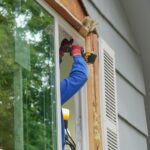
Expert window installation requires precise measurements, proper shimming, and the correct application of expanding insulation foam. Installers must also ensure that the weatherstripping remains intact and functional. If a unit is installed out of square, the sashes will not align correctly, leading to air leaks that negate the technological benefits of the glass.
This is why partnering with a certified, experienced window contractor is essential. Professional installers understand the specific structural requirements of local architecture and guarantee that the product will perform precisely as engineered by the manufacturer.
Long-Term Protections and Secondary Savings
The return on investment extends beyond the direct calculation of utility savings and equity. A properly sealed home protects other valuable assets within the property. The Low-E coatings that reflect heat also block harmful ultraviolet (UV) rays from entering the home. This prevents the fading and degradation of hardwood floors, carpets, artwork, and furniture, saving property owners thousands of dollars in premature replacement costs over the decades.
Furthermore, maintaining a consistent indoor temperature reduces the mechanical strain placed on the property’s HVAC system. Furnaces and air conditioning units that do not have to cycle on and off constantly experience less wear and tear, extending their operational lifespan and delaying the need for expensive mechanical replacements.
Finally, premium products are backed by robust manufacturer protections. Investing in windows with a comprehensive warranty ensures that the financial benefits of the upgrade are protected against material defects or seal failures well into the future. When all these factors are combined—utility reductions, property value increases, tax incentives, and asset protection—high-quality replacement windows stand out as one of the most financially sound investments a property owner can make.
WindowWorks: Chicago’s Trusted Exterior Remodeling Company
WindowWorks has been helping homeowners with new Chicago windows and doors since 1996. The company’s goal today remains exactly as it was in the beginning: to help homeowners by providing industry-leading products paired with expert installation at affordable prices. Operating as a local and family-owned business, WindowWorks has spent nearly 25 years delivering beautiful, long-lasting renovations to well over 51,000 families across the Chicagoland area.
The team is committed to efficient, quality craftsmanship, ensuring that certified installers complete projects without cutting corners, allowing homeowners to enjoy their renovations for a lifetime. WindowWorks is proud to maintain an A+ rating with the Better Business Bureau, having been awarded the Torch Award for Marketplace Ethics. The premium products offered are specially built with insulation designed to lower electric bills and withstand the rigors of Chicago weather. Supported by strong financing partnerships, a commitment to local community charity initiatives, and a Worry-Free Guarantee backed by comprehensive warranties, the company consistently proves why it is the trusted choice for exterior remodeling.
To learn more about the products, services, and community initiatives, connect with WindowWorks online by viewing their Google Profile, following their updates on Facebook, and connecting with their professional network on LinkedIn.
Subscribe to WindowWorks's Blog
Get WindowWorks's latest articles straight to your inbox. Enter your name and email address below.